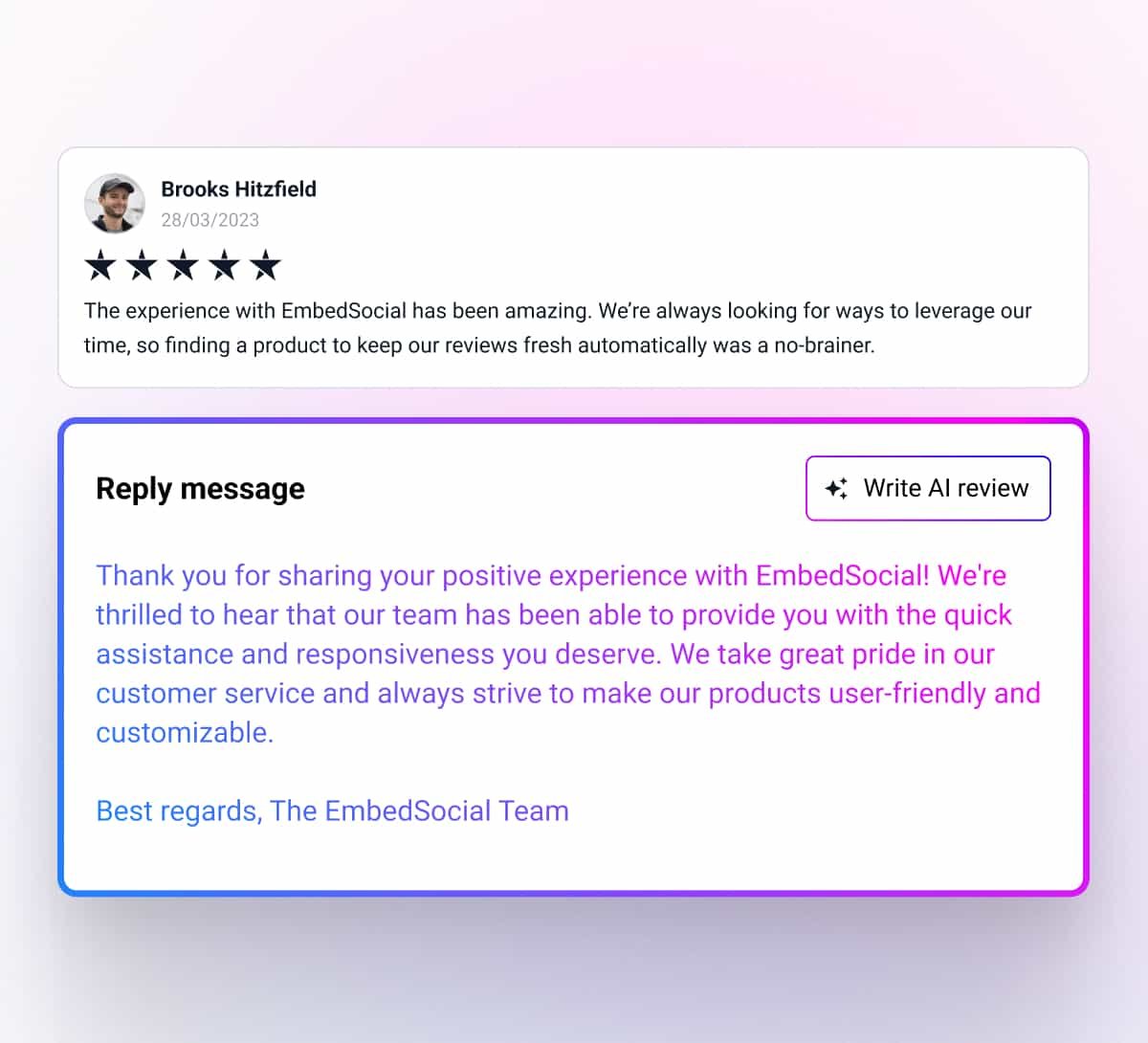
In today’s hyper-connected world, every product launch, service interaction, and customer testimonial generates a tidal wave of feedback. For businesses drowning in data, making sense of these Types of AI Reviews & Their Specific Applications (Product, Service, Testimonials) isn't just a challenge—it's an existential necessity. Artificial intelligence isn't just helping us cope; it's transforming raw opinions into a strategic goldmine, offering unprecedented clarity on what customers truly think and desire.
At a Glance: Your Guide to AI Review Analysis
- What it is: AI feedback analysis uses machine learning to automatically process customer reviews, comments, and testimonials, extracting insights like sentiment, keywords, and recurring themes.
- Why it matters: It saves immense time, eliminates human bias, uncovers hidden trends, and delivers real-time actionable insights to improve products, services, and customer satisfaction.
- Key Benefits: Rapid analysis of thousands of reviews, objective data interpretation, proactive issue detection, and informed decision-making.
- Essential Tools: Look for features like sentiment analysis, topic categorization, multilingual support, and seamless integration with existing systems.
- Real-world Impact: Companies use AI to reduce response times, boost app ratings, refine product roadmaps, and achieve significant ROI.
- Getting Started: Gather diverse data, define clear objectives, compare robust tools, plan your implementation, and maintain a customer-centric mindset.
Beyond the Noise: Why AI is Your Review Superpower
Imagine sifting through ten thousand customer reviews. Manually. You'd be staring at days, possibly weeks, of painstaking work, battling fatigue and the subtle bias of your own interpretation. This is the reality many businesses face, struggling to keep pace with the sheer volume of customer sentiment.
This is precisely where AI feedback analysis steps in, becoming your ultimate review superpower. It's not just a fancy algorithm; it’s a sophisticated system designed to automatically process vast quantities of customer feedback—from app store reviews and social media comments to support tickets and survey responses. By identifying keywords, discerning sentiment (positive, negative, neutral), and flagging recurring issues, AI transforms chaotic raw data into a summarized, actionable understanding of user opinions, without breaking a sweat.
The Unseen Advantage: What AI Brings to Review Analysis
Leveraging AI for customer review analysis isn't just about efficiency; it's about unlocking a deeper, more objective understanding of your customer base. Here's a closer look at the transformative benefits:
Time-Saving at Scale
The most immediate and obvious benefit is sheer speed. AI tools can analyze thousands of customer reviews in mere minutes, a feat that would consume days or even weeks of manual labor. For instance, an AI can scan 10,000 reviews and summarize key findings before your morning coffee cools, allowing your team to focus on acting on insights rather than just finding them.
Unbiased Feedback Analysis
Humans, by nature, are susceptible to fatigue and emotional bias. A reviewer having a bad day might unintentionally skew their interpretation, or a team member might subconsciously prioritize feedback that confirms their existing beliefs. AI processes every review objectively, capturing all feedback regardless of its emotional charge or complexity. This ensures a truly unbiased understanding of your customer sentiment, giving equal weight to every voice.
Identifying Patterns and Trends
The real magic of AI lies in its ability to detect patterns that are invisible to the human eye, especially across massive datasets. It meticulously monitors how feedback evolves over time, flagging recurring issues like "slow load times" or "frequent crashes." This trend detection is invaluable for prioritizing critical fixes and strategic improvements, ensuring you address core problems rather than just surface-level complaints.
Real-Time Insights, 24/7
The customer journey never sleeps, and neither does AI. Providing 24/7 monitoring of customer feedback, AI offers immediate reactions to new app updates, feature rollouts, or marketing campaigns. This continuous oversight enables faster, data-driven decisions and proactive issue resolution, helping you stay ahead of potential problems and capitalize on sudden opportunities.
Boosting Customer Satisfaction and Loyalty
Acting swiftly on AI-generated insights is a direct path to higher customer satisfaction. Addressing problems before they escalate can dramatically improve app ratings, reduce user churn, and foster stronger customer loyalty. Remember, a single negative review has the power to deter up to 22% of prospective customers. Proactive resolution, powered by AI, turns potential detractors into brand advocates.
Tailored Insights: AI's Applications Across Product, Service, and Testimonials
The beauty of AI review analysis lies in its versatility. While the core technology remains consistent, its applications can be finely tuned to address specific needs across different business functions.
For Product Development: Building What Customers Truly Want
For product teams, AI is a game-changer. It goes beyond simple bug reports to reveal the underlying sentiment about features, usability, and unmet needs.
- Pinpointing Bugs and Performance Issues: AI can swiftly identify common technical complaints, like "app crashes when opening camera" or "battery drain after update," allowing developers to prioritize critical fixes with data-backed urgency.
- Uncovering Feature Requests: By analyzing recurring suggestions and positive feedback on competitor features, AI helps surface valuable new feature ideas that resonate with your user base.
- Optimizing User Experience (UX): Is your navigation confusing? Are certain workflows frustrating? AI can highlight specific UX friction points mentioned by multiple users, providing clear directives for design improvements.
- Competitive Benchmarking: Many AI tools can analyze competitor reviews, offering insights into their strengths and weaknesses, helping you differentiate your product effectively.
This level of detailed, organized feedback empowers product managers to make truly data-driven decisions, reducing guesswork and focusing development efforts where they'll have the biggest impact. If you're looking to streamline the feedback loop and even automate content generation based on user preferences, understanding how AI can assist in content creation, like with Our AI review generator, can provide valuable context.
For Service Excellence: Elevating Every Interaction
Customer service is often the front line of brand perception. AI transforms raw feedback into a training ground for improvement.
- Identifying Service Pain Points: AI can categorize feedback related to support interactions, highlighting issues like "long wait times," "unhelpful agents," or "difficulty with returns."
- Improving Agent Training: By analyzing sentiment around specific agent interactions, AI can pinpoint areas where training might be lacking, allowing for targeted coaching and resource development.
- Proactive Problem Solving: If a new policy or product change generates a surge in similar support queries, AI can alert service managers to proactively address the root cause, perhaps through updated FAQs or clearer communication.
- Personalizing Support: Understanding past interactions and preferences from reviews allows agents to provide more personalized and effective support, boosting customer satisfaction.
For Amplifying Testimonials: Showcasing Your Best Self
Testimonials are powerful social proof, but finding the most impactful ones can be like finding a needle in a haystack. AI makes it effortless.
- Surfacing High-Impact Quotes: AI can automatically identify reviews with strong positive sentiment and specific praise for key product features or service aspects, making it easy to pull compelling quotes for marketing materials.
- Understanding What Resonates: By categorizing positive testimonials, you can discern why customers love your brand—is it the speed of delivery, the product's durability, or the outstanding customer care? This insight helps refine your marketing messaging.
- Segmenting Testimonials: AI can help segment testimonials by specific use cases, demographics, or product lines, allowing you to tailor your social proof for different audiences.
- Monitoring Brand Perception: Beyond individual testimonials, AI monitors overall brand sentiment across various platforms, providing a real-time pulse check on public opinion.
Your AI Toolkit: Essential Features for Smart Review Analysis
Not all AI feedback analysis tools are created equal. When considering an investment, look for a platform that offers these critical capabilities to ensure you get the most comprehensive and actionable insights.
- Sentiment Analysis: This is foundational. The tool must accurately detect the emotional tone—positive, negative, or neutral—within customer reviews, and ideally, provide granular sentiment scores for specific entities or topics mentioned.
- Topic Categorization: Beyond just sentiment, a robust tool groups feedback into relevant themes. Think "bugs," "performance," "design," "customer service," "pricing," or "feature requests." This helps you understand what people are talking about.
- Trend Detection: The ability to monitor how customer feedback evolves over time is crucial. This feature helps identify recurring issues, track the impact of new updates, or spot emerging praise.
- Customizable Filters: You need control. Look for tools that allow you to filter reviews by keywords, rating, sentiment, date range, or even specific user segments.
- Multilingual Support: In our global economy, your customers speak many languages. An ideal tool should be capable of processing and analyzing feedback accurately in multiple languages without losing nuance.
- Actionable Insights: Raw data is only useful if it can be translated into concrete recommendations. The best tools don't just show you data; they help you understand what to do next for product improvements, marketing strategies, or operational changes.
- Integration with Other Tools: Seamless connectivity is key. The platform should easily integrate with your existing CRM, app stores (Google Play, Apple App Store), customer support systems, and other business intelligence platforms.
- Real-Time Monitoring: Continuous oversight of customer sentiment as new feedback comes in, providing immediate alerts and updates for critical issues or emerging trends.
Choosing Your Champion: Top AI Platforms for Customer Reviews
The market for AI feedback analysis tools is robust, with several powerful contenders. Here's a look at some of the leading platforms, highlighting their unique strengths and applications based on recent industry insights:
AppFollow
Focus: An AI-powered platform specifically designed for app store review analysis, automating up to 90% of review-related tasks. It excels at identifying problems, trends, and actionable items within mobile app feedback.
Key Features: Advanced sentiment analysis, granular review categorization (bugs, features, UX), customizable filters, multilingual support, and real-time monitoring.
Impact: Customers like Roku have reduced response times by over 10 times, while Kolibri Games saw an 8.5x decrease in average response time, boosting app ratings. AppFollow reports that 8/10 customers address critical bugs 3x faster, with Innovative Connecting achieving an impressive 850% ROI.
Pricing: Starts at $179/month, with a free plan available.
MonkeyLearn
Focus: A no-code AI tool that empowers businesses to uncover deep insights from large, unstructured text datasets using machine learning classification and extraction models.
Key Features: Robust sentiment analysis, comprehensive topic categorization, customizable filters, trend detection, and sophisticated feature extraction. It also offers specialized models for NPS, CSAT, Support Ticket, Survey, and Voice of Customer (VoC) analysis.
Integration: Features an API, SDKs, and a user-friendly graphical interface, supporting multiple languages and high data volumes.
Pricing: A free plan is available, with paid plans starting at $299/month.
Revuze
Focus: An all-in-one Voice of Customer (VoC) platform known for its high precision (90%) in sentiment analysis and topic extraction across diverse platforms.
Process: Gathers feedback from customer reviews, social media, surveys, and support interactions. Its contextual sentiment analysis works across any language without requiring preset keywords.
Recommendations: Provides tailored recommendations directly applicable to Product Development, Market Research, Returns Analysis, and Launch Tracking.
Impact: Char-Broil successfully transformed into a data-driven organization, while Dorel Juvenile uses Revuze to uphold vital safety standards.
Pricing: Custom pricing; demo available.
Yotpo
Focus: Specializes in transforming e-commerce and app reviews into actionable insights by leveraging AI, Natural Language Processing (NLP), and sentiment analysis.
Insights Categories: Offers detailed analysis across Sentiment Tracking, Product Performance, Service Quality, Market Trends, and Competitive Analysis.
Automation: Integrates seamlessly with tools like Shopify Flow Connector, enabling real-time actions such as creating support tickets for negative reviews or triggering targeted marketing campaigns.
Impact: Adore Me analyzed 61,000 reviews, identifying 452 topics, which led to significant product quality improvements, refined marketing strategies, and saved 20 hours/month. Notably, 94% of their analyzed reviews were four stars or higher.
Pricing: Custom pricing; free trial available.
Thematic
Focus: An AI tool designed to uncover granular patterns in reviews by intelligently grouping similar complaints and praise to provide specific, actionable answers.
Key Features: Advanced sentiment analysis, detailed topic categorization, sophisticated trend detection, and highly visual, intuitive dashboards for easy interpretation.
Pricing: Custom pricing, starting from $25,000/year; demo available.
ReviewTrackers
Focus: Aggregates feedback from a multitude of diverse online platforms and employs AI to filter out noise, delivering clear, concise insights for efficient review management.
Key Features: Comprehensive sentiment analysis, robust review aggregation, customizable reporting options, and real-time monitoring capabilities.
Pricing: Not specified.
Lexalytics
Focus: A powerful NLP tool capable of analyzing billions of unstructured documents daily, combining machine learning with rule-based methods for exceptionally detailed text analysis.
Key Features: Granular Sentiment Analysis (scoring documents, entities, topics), extensive Language Support (29 languages, covering 67% of the global population), sophisticated Entity Extraction, Theme Detection, and crucial Intention Analysis. It also includes specialized industry-specific packs.
Integration: Connects to reviews, support tickets, surveys, social media, and emails. Its Automated Processing can recognize 93 Parts of Speech tags and convert informal language for precise analysis.
Insights Distribution: Provides tailored dashboards for various teams, including engineering, marketing, support, and PR.
Recognition: Winner of the 2023 AI Breakthrough Award for Best Overall NLP Company.
Pricing: Custom pricing; free demo available.
BuildBetter's Signal Engine
Focus: An AI-driven platform primarily for product teams, designed to accelerate decision-making by up to 5x. It boasts an average saving of 200 hours annually and uncovers 78% more insights than traditional manual methods.
Key Features: Advanced Review Processing (categorizing diverse feedback), Call Intelligence (transforming customer calls into actionable insights), and precise Sentiment Detection.
Technology: Utilizes CustomContext Technology, which incorporates an organization's unique knowledge base for highly tailored insights.
Actionable Strategies: Offers Call Analysis, User Personas (complete with quotes and demographic data), and Process Optimization for call workflows.
Geographic Focus: Primarily supports US-based teams with robust English language capabilities.
Pricing: Not specified.
Qualtrics XM Discover
Focus: An advanced AI platform that analyzes over 3.5 billion conversations annually in more than 20 languages, transforming reviews and other unstructured data into profound, actionable insights.
Components: Comprises Connectors (for comprehensive data gathering), Designer (for topic organization, sentiment settings, and industry-specific templates), and Studio (for creating custom, real-time dashboards).
NLU Extraction: Excels at extracting intent, emotional tone, customer effort, and the root causes of problems, leveraging a massive database of over 15 billion experience profiles.
Outcomes: Organizations using XM Discover have reported a 40% increase in information shared, with responses nearly 4x longer and covering a wider range of topics.
Applications: Provides capabilities like Automated Call Summaries, Digital Experience Analytics, and Customer Care Assist.
Impact: Hilton famously utilized XM Discover in 2023 across over 7,600 properties globally to achieve record financial performance.
Pricing: Not specified.
Beyond the Hype: Setting Up Your AI Review Strategy
Implementing AI for review analysis isn't a "set it and forget it" task. It requires careful planning and a customer-centric approach to truly unlock its potential.
Step 1: Gather Your Data – Cast a Wide Net
The quality of your insights directly correlates with the diversity and volume of your input. Don't limit yourself to just one source.
- Primary Data Sources: Begin with user reviews from app stores (Google Play, Apple App Store), support tickets, emails, social media mentions, and direct survey responses.
- Wider Scope: Consider public forums, review websites (e.g., Yelp, TripAdvisor, G2), and even internal communication channels if relevant. A greater diversity and volume of data lead to more comprehensive analysis.
Step 2: Define Your Objectives – What Are You Trying to Solve?
Before you even look at tools, clarify what insights you genuinely aim to gain. Without clear objectives, you risk getting lost in a sea of data.
- Specific Goals: Are you looking to improve your app's 3-star reviews to 4-star? Identify the top three recurring bugs? Understand why churn increased last quarter?
- Key Insight Types: Clearly state whether your priority is sentiment analysis, topic modeling, specific language patterns, or identifying customer intent.
Step 3: Research and Compare Tools – The Right Fit for Your Business
The market is rich with options, as seen above. Evaluate different NLP tools based on these crucial factors:
- Integration Capability: Ensures seamless compatibility with your existing CRM, marketing automation, customer support, and business intelligence tools. Can it pull data from all your sources?
- Scalability: Can the tool handle your current data volumes, and more importantly, can it scale to accommodate future growth without performance degradation or exorbitant costs?
- Security Protocols: Protecting sensitive customer data is paramount. Ensure the tool meets all relevant compliance standards (e.g., GDPR, CCPA) and has robust data security measures in place.
- Language Support: If your customer base is global, confirm the tool accurately covers all necessary languages and dialects for precise, global insights.
- Cost Structure: Beyond the initial price tag, consider ongoing maintenance, potential training costs, and how the pricing scales with increased usage or features. Focus on long-term ROI.
Step 4: Plan Implementation – From Pilot to Full Scale
A smooth rollout is essential. Don't just flip a switch; strategize your deployment.
- Set Clear Goals for ROI: How will you measure success? What tangible improvements are you expecting (e.g., X% reduction in bug reports, Y% increase in positive sentiment)?
- Test Thoroughly: Start with a pilot program. Test the chosen tool with a subset of your data and a smaller team to iron out kinks and ensure accuracy.
- Train Your Team: Provide adequate training for all users, from analysts to product managers, on how to effectively use the tool and interpret its outputs.
- Monitor Performance & Gather Feedback: Continuously monitor the tool's accuracy and the quality of its insights. Gather internal feedback for ongoing optimization and refinement.
Step 5: Embrace a Customer-Centric Mindset – It's About Them
Ultimately, AI is a tool to better serve your customers. Keep this at the forefront. Remember that 79% of customers are willing to share personal data for more personalized experiences. Companies that are truly focused on customer feedback perform 5x better than their competitors. AI empowers this focus.
Common Questions About AI Review Analysis
Is AI perfectly accurate in understanding sentiment?
While highly advanced, AI isn't infallible. Modern AI tools boast impressive accuracy (often 85-95% or higher, with some claiming 90% precision like Revuze), but context can be tricky. Sarcasm, cultural nuances, or highly specialized jargon can sometimes trip up even the best algorithms. However, the sheer volume of data it processes provides a highly reliable aggregate view, far surpassing manual capabilities.
Can AI replace human understanding of customer feedback?
No, AI augments, it doesn't replace. AI excels at crunching numbers, identifying patterns, and surfacing trends across vast datasets. Human analysts, however, are crucial for adding empathy, strategic interpretation, and the nuanced understanding required to translate data into innovative solutions. AI provides the "what," humans provide the "why" and "how to act."
What about data privacy and security when using AI tools?
Data privacy is a critical concern. Reputable AI platforms prioritize robust security protocols, data encryption, and compliance with global regulations like GDPR and CCPA. When researching tools, always scrutinize their data handling policies, security certifications, and how they protect sensitive customer information. You should always own your data and maintain control over who accesses it.
Unlocking Your Competitive Edge Through Customer Voice
In the race for market share, the customer's voice is your most potent weapon. Ignoring it is no longer an option, and manually deciphering it is an unsustainable burden. By strategically implementing AI review analysis, you're not just automating a task; you're fundamentally transforming how you understand, react to, and build for your customers. You're moving beyond guesswork, empowering your teams with real-time, unbiased, and actionable insights that drive product innovation, elevate service, and ultimately, cultivate unwavering customer loyalty. The future of business is built on understanding, and with AI, that understanding has never been clearer.